Understanding Business Insurance: What Every Entrepreneur Needs to Know
As an entrepreneur, understanding business insurance is crucial for protecting your investment and ensuring the longevity of your venture. Business insurance encompasses a variety of policies designed to safeguard your assets, including liability insurance, property insurance, and workers' compensation. Each policy serves a unique purpose and provides coverage for specific risks that your business may face. For instance, liability insurance protects you from claims of negligence that could harm others, while property insurance covers physical assets like buildings, equipment, and inventory against risks such as theft or natural disasters.
Before selecting the right insurance policies, it’s essential to assess your business’s unique needs. Begin by creating a checklist of potential risks, categorized into three main areas: operational risks, financial risks, and reputational risks. Engaging with a knowledgeable insurance broker can help you navigate the options available and tailor coverage that meets your requirements. Remember, investing in the right business insurance not only provides peace of mind but also helps you comply with legal obligations and builds trust with clients and partners.
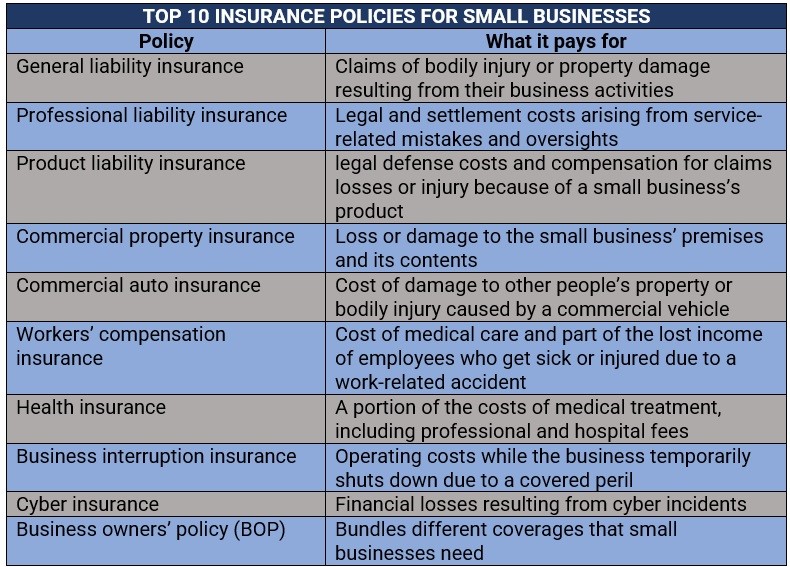
Top 5 Insurance Policies Every Small Business Should Consider
As a small business owner, it's crucial to protect your investment with the right insurance policies. Here are the Top 5 Insurance Policies Every Small Business Should Consider:
- General Liability Insurance: This fundamental policy protects your business against claims related to bodily injury, property damage, and personal injury. It’s essential for any business that interacts with customers or clients.
- Property Insurance: Whether you own your building or lease a space, property insurance covers damages to your business premises and equipment from events like fire, theft, and vandalism.
- Workers' Compensation Insurance: If you have employees, this policy is often legally required. It provides coverage for medical expenses and lost wages for employees injured on the job.
- Professional Liability Insurance: Also known as errors and omissions insurance, this is vital for businesses that offer services. It protects against claims of negligence or malpractice.
- Business Interruption Insurance: This less-known, yet important insurance helps cover lost income and expenses during unexpected disruptions, such as natural disasters.
How to Protect Your Small Business Dreams: Essential Safety Nets Explained
Starting a small business is a fulfilling journey but it can also be fraught with challenges. To ensure your entrepreneurial dreams are safeguarded, it’s crucial to implement essential safety nets. First, consider obtaining a comprehensive business insurance policy to protect against unforeseen events such as theft, natural disasters, or liability claims. These policies can serve as a financial buffer, helping you cover unexpected costs and avoid significant financial setbacks.
Another vital component of your safety net is establishing an emergency fund. Ideally, this fund should cover at least three to six months of operating expenses to keep your business afloat during tough times. Additionally, consider forming a legal entity for your business, such as an LLC or corporation, to protect your personal assets from business liabilities. By taking these proactive steps, you can create a robust framework to ensure your small business dreams remain intact, even when faced with adversity.