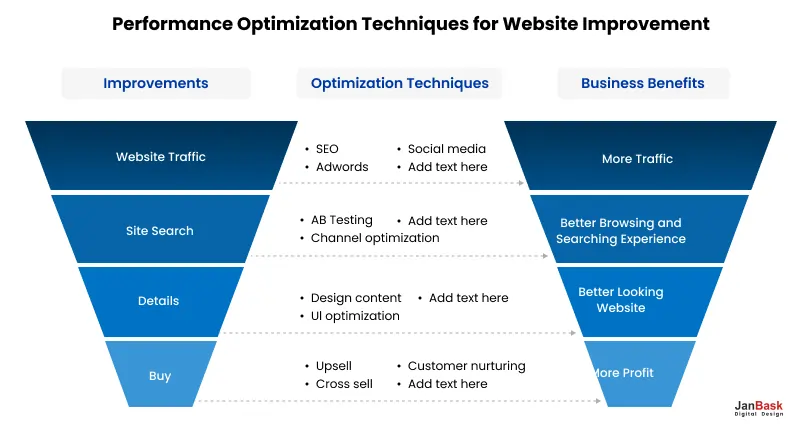
Understanding the Impact of Website Speed on User Experience
Website speed plays a crucial role in enhancing user experience on any online platform. Research shows that users tend to abandon websites that take longer than three seconds to load, highlighting the importance of a fast-loading site. When a website is slow, it not only frustrates visitors but also negatively impacts retention rates. For more insights on the correlation between website speed and user behavior, you can refer to Google Analytics.
Moreover, page speed optimization contributes to better search engine rankings as major search engines like Google factor in site speed in their algorithms. A quicker site can lead to a lower bounce rate and an increase in conversion rates, effectively enhancing overall business performance. Implementing techniques such as image compression, reducing server response time, and utilizing browser caching can significantly improve your website's speed and thereby improve user experience.
Top 5 Reasons Your Website is Slow and How to Fix Them
Having a slow website can significantly impact user experience and your site's search engine rankings. Here are the top 5 reasons your website may be slow:
- Large Images: Unoptimized images can take a long time to load, slowing down your website. Consider compressing images using tools like TinyJPG or using the ImageOptim app to reduce file size without losing quality.
- Too Many HTTP Requests: Each element on your webpage (like scripts, styles, and images) requires an HTTP request. Minimize these by combining CSS and JavaScript files or using a Content Delivery Network (CDN) such as Cloudflare to distribute these requests more efficiently.
- Outdated Plugins: Running outdated or unnecessary plugins can bloat your website and slow it down. Regularly review and update your plugins, using only what you truly need.
- Server Response Time: If your hosting server is slow, so will your website. Invest in a reputable hosting service that guarantees quick load times, such as SiteGround.
- Lack of Caching: Without proper caching mechanisms, your website has to load every item from scratch each time a visitor arrives. Implement caching plugins, like WP Rocket, to enhance performance significantly.
By addressing these key areas, you can improve your website’s speed and provide a better experience for your visitors.
Is Your Website Speed Costing You Sales?
In today's digital landscape, website speed plays a crucial role in the overall user experience and, ultimately, your sales. Research indicates that a mere delay of one second in loading time can lead to a 7% reduction in conversions. This means that if your website takes too long to load, potential customers may abandon their shopping carts and seek faster alternatives. If you're questioning whether your site speed is costing you sales, consider using tools like Google PageSpeed Insights to analyze your performance and implement suggested improvements.
Additionally, slow-loading websites often result in higher bounce rates. According to a study by Gomez, 40% of users abandon a website that takes more than three seconds to load. The impact of speed on sales is clear: if your visitors leave before they even experience your offerings, your revenue potential diminishes. To ensure that your website performs optimally, regularly monitor speed metrics and employ strategies like image optimization, minimizing scripts, and leveraging browser caching.